
 Contacto
 Cómo comprar
Entrega
Guía de compras
The Missouri Compromises and Presidential Politics
1820-1825
 Inglés
 80 b
80 b
Política de devolución de 30 días

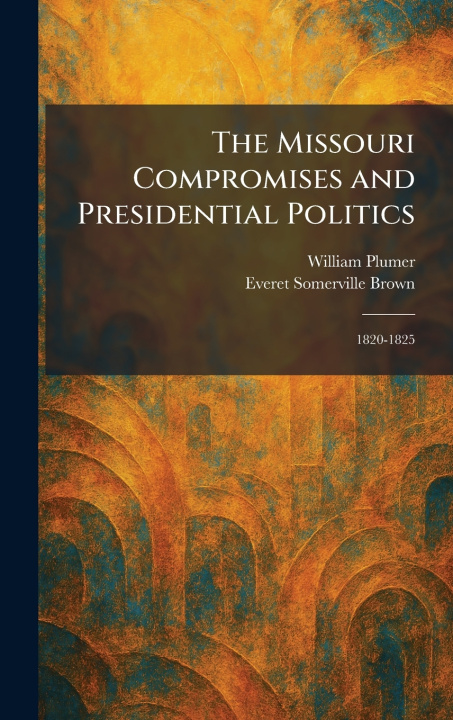
"The Missouri Compromises and Presidential Politics 1820-1825" is a vital historical resource that provides an intimate look at a pivotal turning point in American legislative and executive history. Through the detailed correspondence of William Plumer, Junior-a United States Representative from New Hampshire-this work illuminates the intense debates and backroom maneuvers that defined the early 1820s. Central to these letters is the Missouri Compromise, a legislative milestone that attempted to balance the interests of northern and southern states regarding the expansion of slavery into new territories.
Plumer's observations offer more than a mere record of floor votes; they capture the shifting alliances and personal rivalries within the federal government during the "Era of Good Feelings." The letters track the political landscape leading up to the contentious presidential election of 1824, providing a firsthand account of the erosion of national unity and the rise of sectional tensions. This collection serves as an indispensable primary source for scholars and history enthusiasts, offering unique insights into the motivations of early American statesmen and the complex machinery of 19th-century governance. By chronicling these critical years, the work highlights the fragile nature of the Union and the legislative precedents that shaped the nation's trajectory toward the mid-century.
This work has been selected by scholars as being culturally important, and is part of the knowledge base of civilization as we know it. This work was reproduced from the original artifact, and remains as true to the original work as possible. Therefore, you may see the original copyright references, library stamps (as most of these works have been housed in our most important libraries around the world), and other notations in the work.
This work is in the public domain in the United States of America, and possibly other nations. Within the United States, you may freely copy and distribute this work, as no entity (individual or corporate) has a copyright on the body of the work.
As a reproduction of a historical artifact, this work may contain missing or blurred pages, poor pictures, errant marks, etc. Scholars believe, and we concur, that this work is important enough to be preserved, reproduced, and made generally available to the public. We appreciate your support of the preservation process, and thank you for being an important part of keeping this knowledge alive and relevant.


Sobre el libro
Inglés
