
 Contacto
 Cómo comprar
Entrega
Guía de compras
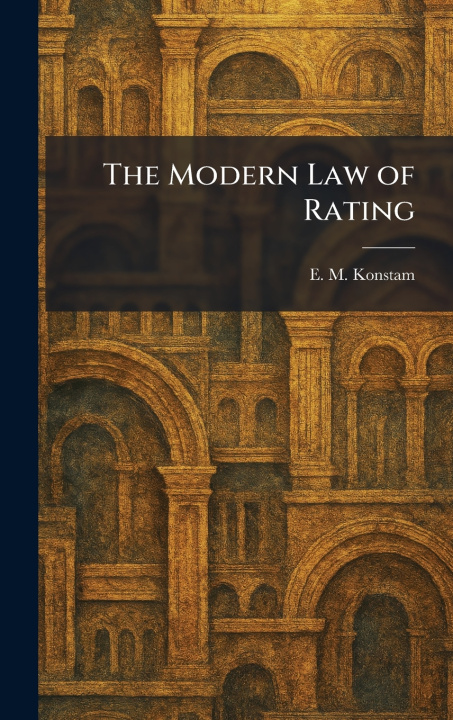
The Modern Law of Rating
 Inglés
 107 b
107 b
Política de devolución de 30 días

"The Modern Law of Rating" is a comprehensive and authoritative legal treatise that provides a thorough examination of the principles and practices governing the assessment and collection of local rates. Authored by E.M. Konstam, a distinguished expert in the field of taxation and valuation, this work serves as an essential reference for legal practitioners, surveyors, and local government officials navigating the complexities of the rating system in the early 20th century.
The text meticulously explores the statutory frameworks and judicial precedents that defined property valuation for rating purposes. It covers critical topics such as the determination of rateable value, the classification of various types of property, and the procedural requirements for appeals and assessments. By synthesizing the "Modern Law of Rating" into an organized and accessible format, Konstam offers deep insights into the economic and legal foundations of local finance. This work is not only a practical guide for the historical application of rating law but also a significant scholarly contribution to the development of administrative and tax law. Its enduring clarity and depth make it a foundational resource for anyone studying the evolution of property rights and public taxation in a legal context.
This work has been selected by scholars as being culturally important, and is part of the knowledge base of civilization as we know it. This work was reproduced from the original artifact, and remains as true to the original work as possible. Therefore, you may see the original copyright references, library stamps (as most of these works have been housed in our most important libraries around the world), and other notations in the work.
This work is in the public domain in the United States of America, and possibly other nations. Within the United States, you may freely copy and distribute this work, as no entity (individual or corporate) has a copyright on the body of the work.
As a reproduction of a historical artifact, this work may contain missing or blurred pages, poor pictures, errant marks, etc. Scholars believe, and we concur, that this work is important enough to be preserved, reproduced, and made generally available to the public. We appreciate your support of the preservation process, and thank you for being an important part of keeping this knowledge alive and relevant.


Sobre el libro
Inglés
Categorías
