
 Contacto
 Cómo comprar
Entrega
Guía de compras
 Inglés
 170 b
170 b
 Próximamente
 Nuevo
Nuevo
 Lanzamiento 14. 08. 2026
Hasta 30 días para devoluciones

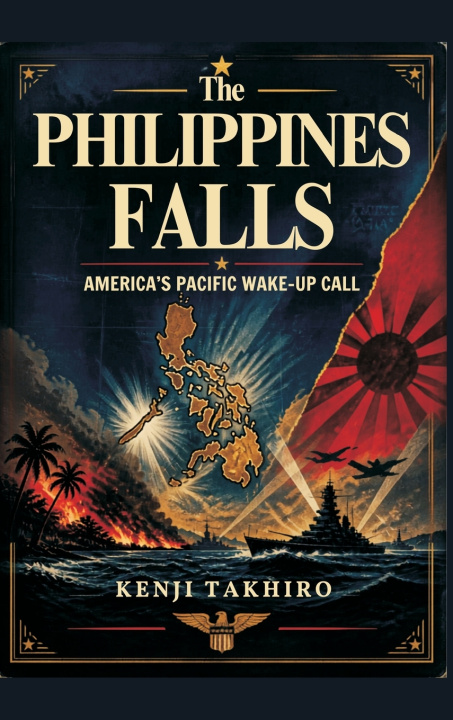
In late 1941, the Philippines stood at the intersection of empire, geography, and ambition. Within months it became the site of one of America's most painful defeats and Japan's most dazzling early victories. The Philippines Falls: America's Pacific Wake-Up Call re-examines this campaign as a tightly bounded operational problem, showing how fragile assumptions about airpower, sea control, and resupply unravelled once Japan seized the initiative. Rather than treating events on Bataan and Corregidor as inevitable tragedy, the book reconstructs a sequence of constrained choices made under pressure, where every decision further narrowed the defenders' room for manoeuvre.
Kenji Takahiro systematically integrates operational narrative with strategic analysis. He explains how prewar planning, base locations, and military logistics shaped what American and Filipino commanders could realistically attempt once they lost the skies. The book explores the rapid neutralisation of airpower and bases, the retreat into Bataan, the collapse of supply, and the grim consequences for prisoners and civilians. It then traces how the loss of the archipelago galvanised US wartime mobilisation, reframed Pacific strategy, and fed into later doctrines of forward defence doctrine and combined arms. Throughout, the Philippines is treated not as an isolated catastrophe, but as a case study in defensive planning limits under strategic surprise.
Written with both students and practitioners in mind, The Philippines Falls offers a clear campaign analysis framework that readers can apply beyond this single theatre. Political scientists, military historians, and general readers interested in the Pacific War will come away with a sharper understanding of how objectives, means, and constraints interact in high-stakes conflicts. By the end, the fall of the Philippines appears not as a simple symbol of sacrifice, but as a complex warning about the costs of misaligned strategy in a contested maritime world.


Sobre el libro
Inglés

Regale este libro hoy
Es fácil
1 Añadir al carrito y elegir Entregar como regalo en el checkout 2 Le enviaremos un vale 3 El libro llegará a la dirección del destinatario¡Hola! Soy Libroamiko, tu asesor de libros.
¿Cómo puedo ayudarte?