
 Contacto
 Cómo comprar
Entrega
Guía de compras
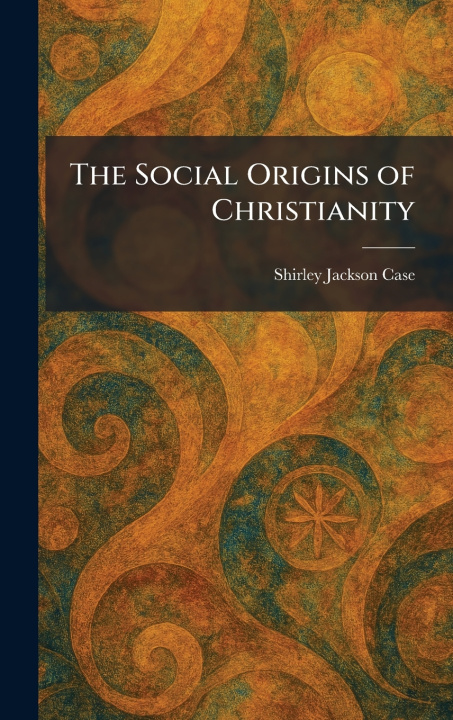
The Social Origins of Christianity
 Inglés
 85 b
85 b
 Nuevo
Nuevo
Política de devolución de 30 días

"The Social Origins of Christianity" offers a groundbreaking examination of the environmental and societal factors that shaped the rise of the early Christian movement. Moving beyond purely doctrinal or theological interpretations, Shirley Jackson Case applies a rigorous socio-historical method to understand how the new faith navigated the complex cultural landscape of the Roman Empire. The work explores the lived experiences of early believers and the communal dynamics that allowed a small Jewish sect to evolve into a significant global religion.
Case meticulously analyzes the interplay between the early church and its Greco-Roman surroundings, highlighting the influence of contemporary social, economic, and political conditions. By investigating the actual environment in which Jesus and his followers lived, the book provides a vivid portrait of the practical challenges and cultural adaptations that defined early Christian life. Scholars and readers interested in the intersection of sociology and religious history will find this volume an essential resource for understanding the human elements of spiritual development.
This scholarly study remains a vital contribution to the field of New Testament studies, emphasizing that the development of Christian thought cannot be separated from the historical context of its people. "The Social Origins of Christianity" remains a classic text for those seeking to appreciate the profound social forces that birthed one of history's most influential institutions.
This work has been selected by scholars as being culturally important, and is part of the knowledge base of civilization as we know it. This work was reproduced from the original artifact, and remains as true to the original work as possible. Therefore, you may see the original copyright references, library stamps (as most of these works have been housed in our most important libraries around the world), and other notations in the work.
This work is in the public domain in the United States of America, and possibly other nations. Within the United States, you may freely copy and distribute this work, as no entity (individual or corporate) has a copyright on the body of the work.
As a reproduction of a historical artifact, this work may contain missing or blurred pages, poor pictures, errant marks, etc. Scholars believe, and we concur, that this work is important enough to be preserved, reproduced, and made generally available to the public. We appreciate your support of the preservation process, and thank you for being an important part of keeping this knowledge alive and relevant.


Sobre el libro
Inglés
Categorías
