
 Contacto
 Cómo comprar
Entrega
Guía de compras
The Story of the 168th Infantry
 Inglés
 66 b
66 b
Política de devolución de 30 días

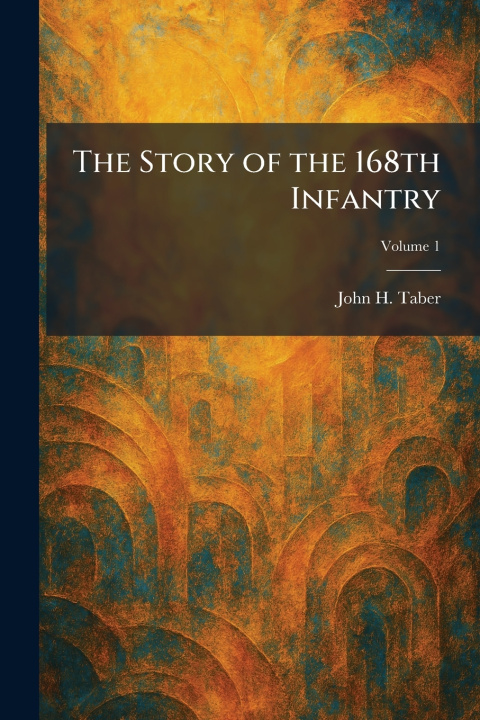
"The Story of the 168th Infantry" is a comprehensive and authoritative account of one of the United States' most storied military units during the First World War. Written by John H. Taber, this first volume meticulously documents the formation, training, and overseas deployment of the 168th Infantry, a pivotal component of the celebrated 42nd (Rainbow) Division. The narrative follows the soldiers from their origins in the American heartland to the grueling battlefields of Europe, providing a detailed look at the regiment's evolution into a formidable fighting force.
The work captures the strategic complexities and the harrowing realities of combat in France, detailing the major engagements and tactical challenges faced by the American Expeditionary Forces. Taber combines historical precision with a narrative that honors the bravery and endurance of the men who served. This volume serves as an essential resource for those interested in unit histories, World War I strategy, and the personal experiences of American doughboys. By chronicling the day-to-day life and significant contributions of the regiment, "The Story of the 168th Infantry" remains a vital record of American military heritage and the legacy of the Rainbow Division.
This work has been selected by scholars as being culturally important, and is part of the knowledge base of civilization as we know it. This work was reproduced from the original artifact, and remains as true to the original work as possible. Therefore, you may see the original copyright references, library stamps (as most of these works have been housed in our most important libraries around the world), and other notations in the work.
This work is in the public domain in the United States of America, and possibly other nations. Within the United States, you may freely copy and distribute this work, as no entity (individual or corporate) has a copyright on the body of the work.
As a reproduction of a historical artifact, this work may contain missing or blurred pages, poor pictures, errant marks, etc. Scholars believe, and we concur, that this work is important enough to be preserved, reproduced, and made generally available to the public. We appreciate your support of the preservation process, and thank you for being an important part of keeping this knowledge alive and relevant.


Sobre el libro
Inglés
