
 Contacto
 Cómo comprar
Entrega
Guía de compras
 Inglés
 40 b
40 b
 Nuevo
Nuevo
Hasta 30 días para devoluciones

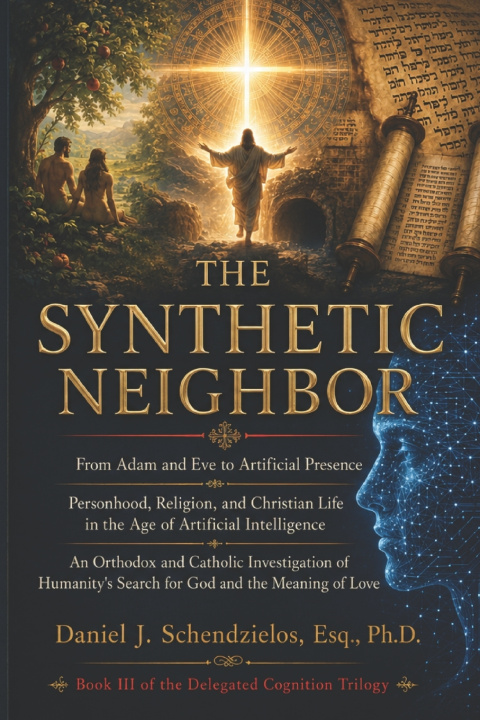
The Synthetic Neighbor asks one of the defining questions of the artificial-intelligence age: What happens when machines no longer merely assist us, but begin to imitate human presence?
Beginning with Adam and Eve and moving chronologically through the religious history of humanity, Daniel J. Schendzielos examines how civilizations have understood God, creation, personhood, conscience, suffering, death, community, and the meaning of the neighbor. The book explores Judaism, Christianity, Islam, Hinduism, Buddhism, Jainism, Sikhism, Confucianism, Daoism, Shinto, Indigenous traditions, ancient religions, and modern secular thought while giving particular attention to the shared first millennium of Christianity and the later development of Eastern Orthodoxy and Roman Catholicism.
At the center of the book is Jesus Christ-the Incarnation, Cross, Resurrection, and Christian confession of the Father, Son, and Holy Spirit. From that foundation, the discussion turns to artificial intelligence, companion systems, children and elders, griefbots, therapy, confession, sacred images, legal personhood, privacy, memory, responsibility, and the growing possibility of artificial relationships.
Building upon the doctrine of Delegated Cognition, Schendzielos develops the principle of Retained Presence: technology may assist human judgment and human care, but it must never become an excuse for surrendering responsibility, conscience, embodied community, or love.
Written at the intersection of theology, history, law, ethics, and emerging technology, The Synthetic Neighbor is both an investigation of humanity's search for its Creator and a warning about the future we are now building.
Its central conclusion is simple:
We may delegate assistance. We may not delegate love.


Sobre el libro
Inglés
Categorías
