
 Contacto
 Cómo comprar
Entrega
Guía de compras
 Inglés
 40 b
40 b
 Próximamente
 Nuevo
Nuevo
 Fecha desconocida
Hasta 30 días para devoluciones

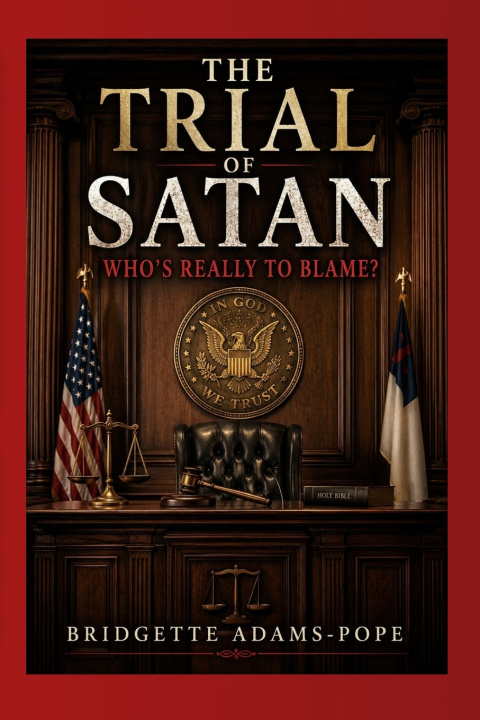
What if Satan were finally brought to trial-and humanity had to prove that he was responsible for the choices people made?
For generations, people have repeated a familiar explanation when confronted with wrongdoing: "The devil made me do it." But what if that defense were put on trial?
In The Trial of Satan: Who's Really to Blame?, author Bridgette Adams-Pope transforms one of Christianity's most familiar expressions into a provocative courtroom drama exploring temptation, spiritual influence, free will, faith, and personal responsibility.
The People have brought an unprecedented case against Satan, accusing him of spiritual endangerment and malicious interference in human behavior. The prosecution argues that Satan deliberately studies human weakness, exploits vulnerability, introduces deception, and influences people toward decisions that damage relationships, destroy lives, and separate them from God.
But the defense raises a question the courtroom cannot easily dismiss: Influence may be powerful-but is influence the same as control?
Satan does not have to prove that he never tempted anyone. Instead, the defense forces the court to examine what happens after temptation appears.
Did the defendant force the person to act?
Did he remove free will?
Or did he simply present an opportunity, whisper a suggestion, exploit a desire, or reinforce something already present-and allow the individual to choose?
One by one, witnesses take the stand.
Their stories reveal broken relationships, destructive thoughts, confusion, vulnerability, regret, temptation, resistance, repentance, and spiritual discipline. Mabel Mayhem discovers how easily temptation can disguise itself as understanding. Charlie Cross struggles to separate outside influence from thoughts that feel like his own. Constance Confusion discovers how suggestion can change perception. Addison Tude confronts responsibility with startling honesty. Agatha Spirit demonstrates what can happen when spiritual preparation meets temptation. Anita Mann forces the courtroom to consider what it means to know something is wrong and choose it anyway.
Then Pastor Larry Livrite introduces an uncomfortable distinction: influence may press against human choice, distort it, and make truth more difficult to recognize-but control removes choice altogether. Influence requires something more: human agreement.
As testimony unfolds and Scripture enters the arguments, the courtroom becomes more than a place where Satan's guilt is examined. It becomes a mirror.
If Satan tempts but a person chooses, who is responsible?
If deception contributes to a bad decision, does that eliminate accountability?
Can Satan be responsible for the temptation while humanity remains responsible for the response?
And if believers are instructed to resist the devil, does that command itself suggest that resistance-and therefore choice-is possible?
The jury must decide.
But some questions cannot be neatly reduced to guilty or not guilty.
Blending contemporary courtroom drama with biblical themes and spiritual reflection, The Trial of Satan: Who's Really to Blame? invites readers to wrestle with the uncomfortable space where temptation, influence, desire, and responsibility intersect. The story deliberately refuses to provide an easy answer because the ultimate verdict belongs not only to the characters in the courtroom-but to the reader.
The book also includes a four-week discussion guide designed for individuals, book clubs, Bible studies, small groups, and churches. Through Scripture, reflection, discussion, and personal application, readers are invited to move beyond debating Satan's responsibility and begin examining their own choices.
The trial may end.
But the choice remains.
If Satan didn't make you do it... who did?


Sobre el libro
Inglés

Regale este libro hoy
Es fácil
1 Añadir al carrito y elegir Entregar como regalo en el checkout 2 Le enviaremos un vale 3 El libro llegará a la dirección del destinatario¡Hola! Soy Libroamiko, tu asesor de libros.
¿Cómo puedo ayudarte?