
 Contacto
 Cómo comprar
Entrega
Guía de compras
 Inglés
 100 b
100 b
Política de devolución de 30 días

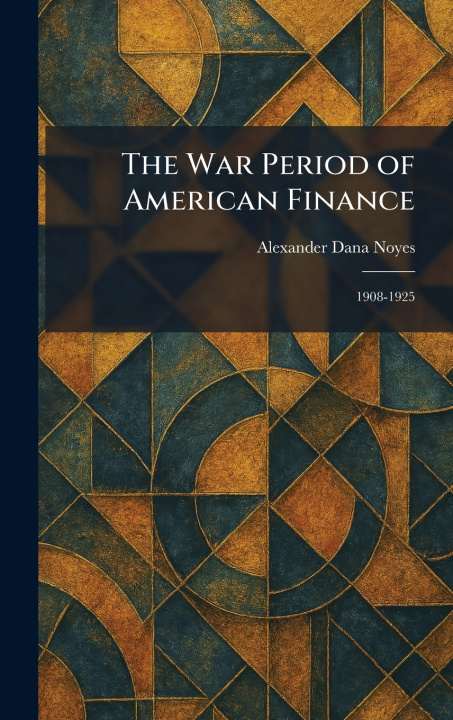
"The War Period of American Finance, 1908-1925" is a comprehensive analysis of the transformative years that reshaped the American economic landscape. Written by Alexander Dana Noyes, a prominent financial journalist of the era, the work examines the lead-up to World War I, the intense financial pressures of the war years, and the subsequent transition to the post-war economy.
The narrative begins with the aftermath of the 1907 panic and the establishment of the Federal Reserve System, tracing how the United States evolved from a debtor nation into a global financial leader. Noyes provides detailed insights into the mobilization of credit, the management of war debts, and the fluctuating cycles of inflation and deflation that characterized this volatile period.
This study serves as an essential resource for understanding the foundations of modern American fiscal policy and the global economic shifts triggered by the Great War. It offers a clear-eyed perspective on the challenges of international exchange, the growth of the American banking system, and the complex relationship between government action and private markets during times of national crisis.
This work has been selected by scholars as being culturally important, and is part of the knowledge base of civilization as we know it. This work was reproduced from the original artifact, and remains as true to the original work as possible. Therefore, you may see the original copyright references, library stamps (as most of these works have been housed in our most important libraries around the world), and other notations in the work.
This work is in the public domain in the United States of America, and possibly other nations. Within the United States, you may freely copy and distribute this work, as no entity (individual or corporate) has a copyright on the body of the work.
As a reproduction of a historical artifact, this work may contain missing or blurred pages, poor pictures, errant marks, etc. Scholars believe, and we concur, that this work is important enough to be preserved, reproduced, and made generally available to the public. We appreciate your support of the preservation process, and thank you for being an important part of keeping this knowledge alive and relevant.


Sobre el libro
Inglés
