
 Contacto
 Cómo comprar
Entrega
Guía de compras
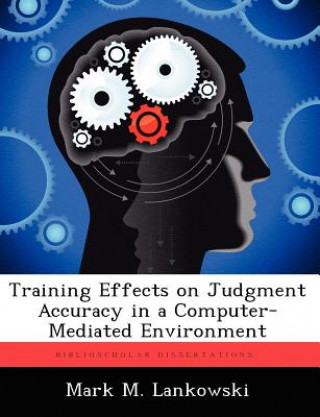
Training Effects on Judgment Accuracy in a Computer-Mediated Environment
 Inglés
 42 b
42 b
Hasta 30 días para devoluciones
Clientes que también han comprado








 /
/
 Tapa blanda
 39.39
€
39.39
€
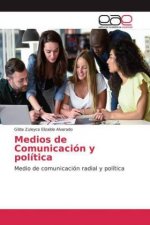


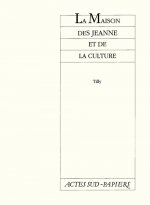







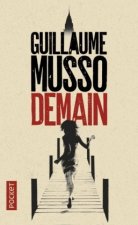

 /
Tapa blanda
20.39
€
/
Tapa blanda
20.39
€


The United States Air Force (AF) has named Information Superiority the core competency "upon which all the other core competencies rely". In order to achieve Information Superiority, deceptive communication must be minimized. According to researchers, deception occurs when communicators control the information contained in their messages to convey a meaning that departs from the truth. This research draws on Biros, George, and Zmuds' (2002) deception research model to determine if training to detect deception will improve a person's deception detection performance in a computermediated environment. A longitudinal experiment was conducted with AF participants (N=119) where three separate training plans were provided as the treatments, and measurements of the participants' deception detection performance were taken before and after each of the three treatments. Each measurement was taken in the form of six judgment scenarios provided through three forms of computer-mediated communication. Partial support was found for training improving deception detection performance and reducing the number of false alarms in a computer-mediated environment, based upon the first training treatment and a combination of the first and second training treatments. However, contradictory results came from the second and third training treatments. The most significant finding was that the performance of AF participants attempting to detect deception in a computer-mediated environment could be improved by a training session. Further research should explore the best training methods to improve the deception detection performance of all AF members in order to achieve the goal of Information Superiority.


Sobre el libro
Inglés
Categorías

Regale este libro hoy
Es fácil
1 Añadir al carrito y elegir Entregar como regalo en el checkout 2 Le enviaremos un vale 3 El libro llegará a la dirección del destinatarioTambién puede interesarle





 /
Tapa blanda
13.19
€
/
Tapa blanda
13.19
€
 /
Tapa dura
134.79
€
/
Tapa dura
134.79
€




 /
Tapa blanda
48.09
€
/
Tapa blanda
48.09
€
 /
Tapa blanda
7.99
€
/
Tapa blanda
7.99
€





 /
Tapa blanda
25.89
€
/
Tapa blanda
25.89
€
 /
Tapa dura
44.59
€
/
Tapa dura
44.59
€




 /
Tapa blanda
21.99
€
/
Tapa blanda
21.99
€
¡Hola! Soy Libroamiko, tu asesor de libros.
¿Cómo puedo ayudarte?