
 Contacto
 Cómo comprar
Entrega
Guía de compras
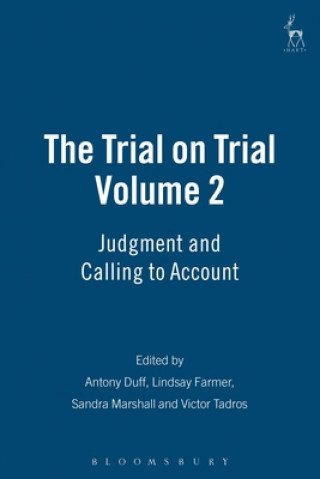
Trial on Trial: Volume 2
Judgment and Calling to Account
 Inglés
 398 b
398 b
Hasta 30 días para devoluciones
Clientes que también han comprado

 /
/
 Tapa dura
 30.69
€
30.69
€



 Tapa blanda
7.69
€
Tapa blanda
7.69
€







What are the aims of a criminal trial? What social functions should it perform? And how is the trial as a political institution linked to other institutions in a democratic polity? What follows if we understand a criminal trial as calling a defendant to answer to a charge of criminal wrongdoing and, if he is judged to be responsible for such wrongdoing, to account for his conduct? A normative theory of the trial, an account of what trials ought to be and of what ends they should serve, must take these central aspects of the trial seriously; but they raise a number of difficult questions. They suggest that the trial should be seen as a communicative process: but what kinds of communication should it involve? What kind of political theory does a communicative conception of the trial require? Can trials ever actually amount to more than the imposition of state power on the defendant? What political role might trials play in conflicts that must deal not simply with issues of individual responsibility but with broader collective wrongs, including wrongs perpetrated by, or in the name of, the state? These are the issues addressed by the essays in this volume. The third volume in this series, in which the four editors of this volume develop their own normative account, will be published in 2007.


Sobre el libro
Inglés

Regale este libro hoy
Es fácil
1 Añadir al carrito y elegir Entregar como regalo en el checkout 2 Le enviaremos un vale 3 El libro llegará a la dirección del destinatarioTambién puede interesarle









¡Hola! Soy Libroamiko, tu asesor de libros.
¿Cómo puedo ayudarte?