
 Contacto
 Cómo comprar
Entrega
Guía de compras
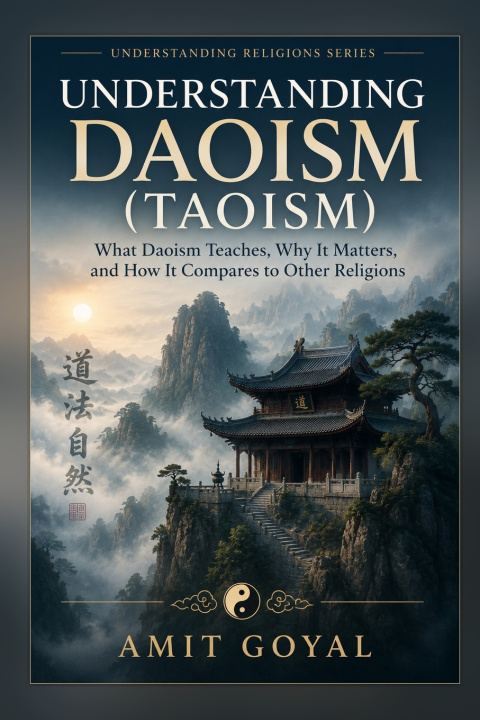
Understanding Daoism (Taoism)
 Inglés
 22 b
22 b
 Nuevo
Nuevo
Hasta 30 días para devoluciones
Clientes que también han comprado


A clear, respectful, and practical guide to Daoism for readers who want to understand one of China's most influential religious and philosophical traditions.
Daoism is often reduced to a few familiar ideas: going with the flow, yin and yang, nature, effortless action, or a mysterious book called the Daodejing. Those ideas matter, but they are only the beginning. Daoism also includes temples, priests, rituals, talismans, meditation, breathing practices, sacred mountains, gods, immortals, funerals, healing rites, festivals, family religion, local community practice, and centuries of interaction with Buddhism, Confucianism, and Chinese popular religion.
Understanding Daoism (Taoism) gives outsiders a clear mental map of this layered tradition. It explains Daoism as philosophy, religion, culture, practice, and living Chinese inheritance without reducing it to either abstract wisdom quotes or exotic ritual.
This book is not written to convert anyone. It is not a devotional manual, a priestly guide, or a polemic for or against Daoism. It is written to explain Daoism fairly: what it teaches, how it is practiced, why it matters, and how it compares with other religious and secular ways of understanding life.
Inside, you will find clear explanations of:
- the Dao, De, wu wei, ziran, simplicity, softness, and naturalness
- Laozi, the Daodejing, Zhuangzi, and the classic texts that shape Daoist imagination
- yin-yang, qi, the body-cosmos, immortality, inner cultivation, and alchemy
- Daoist gods, immortals, ancestors, spirits, temples, priests, registers, and rituals
- Zhengyi and Quanzhen traditions, sacred mountains, festivals, funerals, and local practice
- Daoism's relationship with Confucianism, Buddhism, Chinese popular religion, and secular modern life
- modern Daoism in China, Taiwan, Hong Kong, diaspora communities, Western wellness culture, and contemporary state regulation
The book also answers questions outsiders actually ask: Is Daoism a religion or a philosophy? Is Taoism the same as Daoism? Do Daoists believe in gods? Is wu wei laziness? Is yin-yang Daoist? Is qigong religious? What is a Daoist priest? Are talismans superstition? How is Daoism different from Buddhism and Confucianism? Can non-Chinese readers learn from Daoism without appropriating it?
This is a concise, table-driven, outsider-friendly guide for Christians, Muslims, Jews, Hindus, Buddhists, secular readers, meditators, travelers, students, Chinese-diaspora readers, wellness practitioners, and anyone trying to understand Daoism beyond slogans.
Understand with an open mind. Appreciate without pretending everything is simple.


Sobre el libro
Inglés

Regale este libro hoy
Es fácil
1 Añadir al carrito y elegir Entregar como regalo en el checkout 2 Le enviaremos un vale 3 El libro llegará a la dirección del destinatarioTambién puede interesarle




 /
/
 Adobe ePub DRM
 9.79
€
9.79
€