
 Contacto
 Cómo comprar
Entrega
Guía de compras
Vector Semantics
 Inglés
 111 b
111 b
Política de devolución de 30 días
Clientes que también han comprado





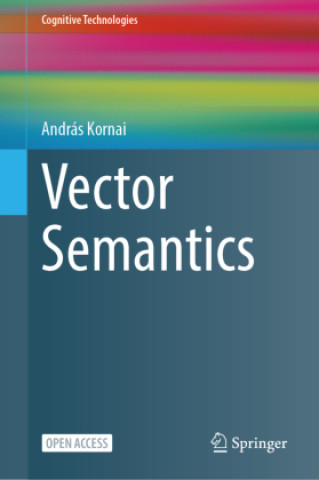
This open access book introduces Vector semantics, which links the formal theory of word vectors to the cognitive theory of linguistics. The computational linguists and deep learning researchers who developed word vectors have relied primarily on the ever-increasing availability of large corpora and of computers with highly parallel GPU and TPU compute engines, and their focus is with endowing computers with natural language capabilities for practical applications such as machine translation or question answering. Cognitive linguists investigate natural language from the perspective of human cognition, the relation between language and thought, and questions about conceptual universals, relying primarily on in-depth investigation of language in use. In spite of the fact that these two schools both have 'linguistics' in their name, so far there has been very limited communication between them, as their historical origins, data collection methods, and conceptual apparatuses are quite different. Vector semantics bridges the gap by presenting a formal theory, cast in terms of linear polytopes, that generalizes both word vectors and conceptual structures, by treating each dictionary definition as an equation, and the entire lexicon as a set of equations mutually constraining all meanings.


Sobre el libro
Inglés

Regale este libro hoy
Es fácil
1 Añadir al carrito y elegir Entregar como regalo en el checkout 2 Le enviaremos un vale 3 El libro llegará a la dirección del destinatarioTambién puede interesarle
 /
/
 Tapa blanda
 90.29
€
90.29
€


 /
Tapa blanda
70.19
€
/
Tapa blanda
70.19
€


 /
Tapa blanda
27.19
€
/
Tapa blanda
27.19
€






 /
Tapa blanda
16.79
€
/
Tapa blanda
16.79
€






 /
Tapa blanda
53.39
€
/
Tapa blanda
53.39
€




¡Hola! Soy Libroamiko, tu asesor de libros.
¿Cómo puedo ayudarte?