
 Contacto
 Cómo comprar
Entrega
Guía de compras
Visualization, Explanation and Reasoning Styles in Mathematics
 Inglés
 276 b
276 b
Hasta 30 días para devoluciones
Clientes que también han comprado



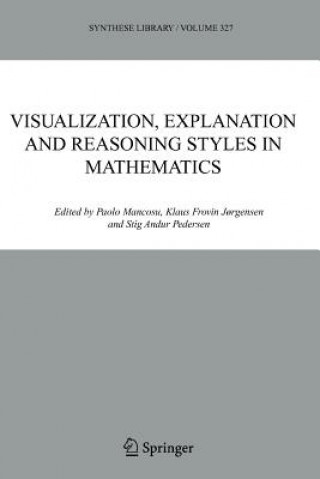
This book contains groundbreaking contributions to the philosophical analysis of mathematical practice. Several philosophers of mathematics have recently called for an approach to philosophy of mathematics that pays more attention to mathematical practice. Questions concerning concept-formation, understanding, heuristics, changes in style of reasoning, the role of analogies and diagrams, etc. have become the subject of intense interest. The historians and philosophers in this book agree that there is more to understanding mathematics than a study of its logical structure. How are mathematical objects and concepts generated? How does the process tie up with justification? What role do visual images and diagrams play in mathematical activity? What are the different epistemic virtues (explanatoriness, understanding, visualizability, etc.) which are pursued and cherished by mathematicians in their work? The reader will find here systematic philosophical analyses as well as a wealth of philosophically informed case studies ranging from Babylonian, Greek, and Chinese mathematics to nineteenth century real and complex analysis.This book contains groundbreaking contributions to the philosophical analysis of mathematical practice. Several philosophers of mathematics have recently called for an approach to philosophy of mathematics that pays more attention to mathematical practice. Questions concerning concept-formation, understanding, heuristics, changes in style of reasoning, the role of analogies and diagrams etc. have become the subject of intense interest. The historians and philosophers in this book agree that there is more to understanding mathematics than a study of its logical structure. How are mathematical objects and concepts generated? How does the process tie up with justification? What role do visual images and diagrams play in mathematical activity? What are the different epistemic virtues (explanatoriness, understanding, visualizability, etc.) which are pursued and cherished by mathematicians in their work? The reader will find here systematic philosophical analyses as well as a wealth of philosophically informed case studies ranging from Babylonian, Greek, and Chinese mathematics to nineteenth century real and complex analysis.


Sobre el libro
Inglés
Categorías

Regale este libro hoy
Es fácil
1 Añadir al carrito y elegir Entregar como regalo en el checkout 2 Le enviaremos un vale 3 El libro llegará a la dirección del destinatarioTambién puede interesarle





 /
/
 Tapa blanda
 15.79
€
15.79
€

¡Hola! Soy Libroamiko, tu asesor de libros.
¿Cómo puedo ayudarte?