Contacto
 Cómo comprar
Entrega
Guía de compras
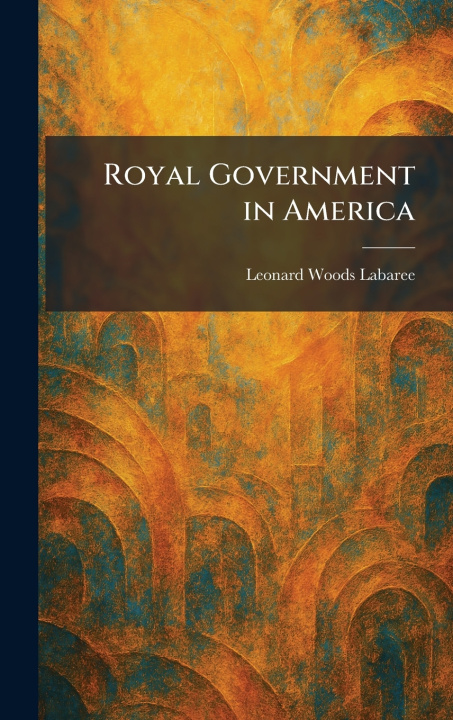
Royal Government in America
 Inglés
 100 b
100 b
Política de devolución de 30 días
Clientes que también han comprado









"Royal Government in America" is a definitive scholarly examination of the administrative and political structures that defined the British colonial system in the eighteenth century. Leonard Woods Labaree provides a comprehensive analysis of the evolution of royal governance, focusing on the complex interplay between the British Crown, colonial governors, and the provincial assemblies. Through a meticulous study of commissions, instructions, and historical records, the work elucidates how the royal prerogative was exercised and challenged in the American colonies leading up to the Revolution.
The book delves into the roles and responsibilities of the royal governor, the function of the colonial council, and the fiscal challenges inherent in maintaining British authority across the Atlantic. Labaree explores the growing tensions between imperial policy and local legislative desires, offering profound insights into the constitutional conflicts that would eventually culminate in the struggle for independence. This work remains an essential resource for historians and students interested in the legal and institutional foundations of colonial America, providing a clear window into the bureaucratic machinery of the British Empire at its peak.
This work has been selected by scholars as being culturally important, and is part of the knowledge base of civilization as we know it. This work was reproduced from the original artifact, and remains as true to the original work as possible. Therefore, you may see the original copyright references, library stamps (as most of these works have been housed in our most important libraries around the world), and other notations in the work.
This work is in the public domain in the United States of America, and possibly other nations. Within the United States, you may freely copy and distribute this work, as no entity (individual or corporate) has a copyright on the body of the work.
As a reproduction of a historical artifact, this work may contain missing or blurred pages, poor pictures, errant marks, etc. Scholars believe, and we concur, that this work is important enough to be preserved, reproduced, and made generally available to the public. We appreciate your support of the preservation process, and thank you for being an important part of keeping this knowledge alive and relevant.


Sobre el libro
Inglés

Regale este libro hoy
Es fácil
1 Añadir al carrito y elegir Entregar como regalo en el checkout 2 Le enviaremos un vale 3 El libro llegará a la dirección del destinatarioTambién puede interesarle



 /
/
 Tapa blanda
 25.69
€
25.69
€




 /
Tapa dura
349.69
€
/
Tapa dura
349.69
€